


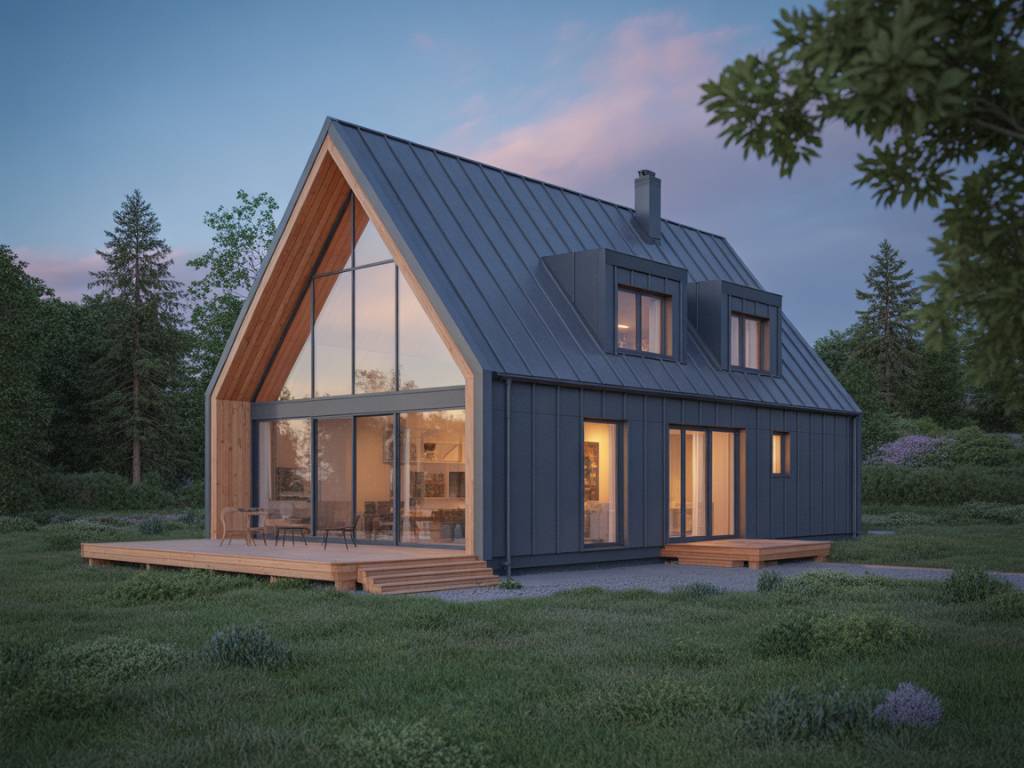
Why exterior insulation is a powerful way to cut heating bills
External wall insulation, often called external thermal insulation composite system (ETICS) or solid wall insulation from the outside, is one of the most effective methods to reduce heating bills over the long term. Instead of acting inside the house, you wrap the building envelope with an insulating layer and a protective finish. This helps create a continuous thermal barrier, eliminates most thermal bridges, and significantly improves comfort in winter and summer.
For many homes, especially older houses with poorly insulated walls, insulating from the outside can cut heating consumption by 25 to 50%, depending on the initial state of the building, the climate, and the chosen insulation thickness. Beyond energy savings, homeowners also gain improved acoustic comfort, better protection of façades, and an increase in the property’s value.
How external wall insulation works
Externally insulating a house means adding different layers on the outside of the existing wall, from the structural wall to the final decorative coating. The idea is to keep the masonry at a more stable temperature by placing the thermal resistance outside. This reduces heat loss in winter and excessive heat gains in summer.
A typical external insulation system is made up of:
- Existing load-bearing wall: brick, blockwork, concrete, stone, or timber frame.
- Adhesive and/or mechanical fixings: glues and dowels that hold the boards in place.
- Insulation boards: expanded polystyrene (EPS), graphite EPS, mineral wool, wood fibre, PUR/PIR, or other materials.
- Reinforcement layer: base coat mortar plus a reinforcing mesh.
- Finishing coat: decorative render (thin-coat acrylic, silicate, silicone), cladding, or brick slips.
This multi-layer system enhances the overall thermal performance of the façade while still allowing walls to breathe, provided you choose appropriate materials and a properly designed build-up.
Main benefits of insulating your house from the outside
Choosing exterior insulation instead of interior solutions brings several technical and practical advantages that directly impact heating bills and comfort.
- Energy savings and stable comfort: placing the insulation outside eliminates many cold bridges (lintels, slab edges, junctions), which are frequent sources of heat loss. Indoor temperatures become more stable and the heating system runs less often.
- No loss of interior surface area: unlike interior insulation, the usable floor area is preserved. This is especially important in small houses or apartments where every square metre counts.
- Continuous insulation layer: the external envelope covers the entire façade, reducing air leaks and draughts. This continuity is key to high energy performance and to reaching low-energy standards.
- Façade renovation and thermal upgrade at the same time: if your exterior façades are ageing, cracked, or aesthetically outdated, external insulation is a way to address both appearance and energy efficiency in one project.
- Better summer comfort: by limiting heat transfer through walls, external insulation also helps keep indoor spaces cooler during heatwaves. Massive walls remain cooler for longer.
- Protection of the structure: the masonry is protected from temperature shocks and moisture, which can improve its long-term durability.
Choosing the right insulation material for exterior use
The choice of insulation material has a direct impact on the overall performance, ecological footprint, fire behaviour, and cost of the project. Several families of products dominate the market for façade insulation.
Expanded polystyrene (EPS) is widely used because it is lightweight, has good thermal performance, and is relatively affordable. Graphite EPS boards offer even better insulation for a similar thickness. However, EPS is a petrochemical product and is not vapour open, which may be a limitation in some build-ups.
Mineral wool (rock wool or glass wool) is an attractive option for those who are concerned about fire resistance and acoustic insulation. Mineral wool façades are breathable and offer good sound reduction, which is appreciated in noisy urban areas.
Wood fibre boards and other bio-based insulations appeal to environmentally conscious homeowners and for heritage buildings. They provide good hygrothermal regulation, helping to manage moisture and improve the indoor climate. They are often combined with lime-based renders.
PUR/PIR rigid foam boards offer very high thermal performance for a given thickness, making them a solution for situations where façade thickness must be minimised. Their environmental impact and sensitivity to UV during installation must be considered.
To select the right product, it is essential to compare:
- Thermal conductivity (lambda value) and required thickness
- Vapour diffusion resistance and compatibility with existing walls
- Reaction to fire class and local regulations
- Environmental footprint and recyclability
- Total project cost, including installation and finishing
Key steps of an external insulation project
Insulating your home from the outside is a construction project that reshapes the building envelope. It should be carefully designed and executed to ensure performance and durability. The main phases are generally as follows.
1. Energy assessment and feasibility study
Before choosing any materials, an energy audit or at least a detailed assessment of the building envelope is recommended. This makes it possible to:
- Identify current heat losses through walls, windows, and roof
- Check the state of the existing façade and any structural defects
- Evaluate moisture issues, condensation risks, and air leakage
- Estimate potential energy savings and return on investment
2. Design and technical choices
At this stage, you or your contractor define:
- Type and thickness of insulation based on local climate and energy target
- Type of finishing (render, cladding, brick slips) and colour
- Detailing at window openings, balconies, roofs, and foundations
- Position of the new façade line and impact on shading and aesthetics
Careful design of junctions is crucial to avoid thermal bridges and water ingress. Window reveals, sill extensions, and roof overhangs often need to be modified.
3. Preparation of façades
Existing façades must be clean, sound, and stable. This may involve:
- Cleaning and de-greasing the wall surface
- Repairing cracks and damaged areas
- Removing old, loose renders or claddings
- Ensuring a flat and even substrate to receive the new system
4. Fixing insulation boards
Boards are usually installed from the bottom upwards, starting with a base profile to ensure a straight line. According to the system, they are fixed using adhesive, mechanical anchors, or a combination of both. Joints between boards should be tight, with staggered vertical joints to avoid continuous gaps.
5. Adding the reinforcement layer
A base coat mortar is applied over the insulation and a reinforcing mesh is embedded into it. This layer contributes to the mechanical strength of the façade and prevents cracking. Corners, window edges, and openings receive additional reinforcement.
6. Applying the finishing coat
Once the base coat is dry, the final finishing is applied. It can be a coloured thin coat render, a mineral finish, or ventilated cladding panels. The choice of colour and texture has a strong impact on the appearance of the house and on maintenance needs.
Cost, financial aids, and return on investment
External wall insulation represents a significant investment, higher than simple interior insulation. The cost per square metre depends on the chosen system, the complexity of façades, scaffolding, and regional labour rates. Even if the initial outlay is substantial, the long-term reduction in heating bills and improved comfort can make the operation attractive.
In many countries, energy renovation schemes, tax credits, low-interest eco-loans, or direct subsidies exist to support homeowners who wish to insulate their homes. It is worth checking local programmes before starting the project, as they can reduce the final cost and shorten the payback period.
The return on investment depends on the initial energy performance of the house, heating energy prices, and the quality of the installation. In cold climates with high energy costs, payback periods of 8 to 15 years are common for well-designed projects.
Important points to watch for durable performance
To really benefit from lower heating bills and enjoy lasting comfort, some technical aspects must be handled with care.
- Ventilation and indoor air quality: by improving airtightness, exterior insulation may slightly reduce natural air leakage, so a controlled ventilation system (such as mechanical ventilation with heat recovery) becomes even more important.
- Moisture management: walls must be able to dry either to the inside or to the outside, depending on the build-up. A wrong combination of vapour-tight layers can cause condensation and damage. A professional hygrothermal assessment is strongly recommended for old stone or mixed walls.
- Fire safety and regulations: façade systems must comply with local fire regulations, especially for multi-storey buildings. Always verify classification and installation rules.
- Bridges and junctions: attention to details at balconies, terraces, window frames, and the base of walls is essential to avoid thermal bridges and water ingress.
- Compatibility with heritage façades: in protected areas or for historical buildings, external insulation might be restricted or must use specific materials and finishes. Local planning permissions may be required.
Is exterior insulation the right choice for your home?
External wall insulation is particularly suitable for:
- Houses with little or no existing wall insulation
- Solid-wall buildings where internal insulation would significantly reduce space
- Homes needing façade renovation or waterproofing improvements
- Owners planning a comprehensive energy retrofit, including windows and roof
On the other hand, it may be less appropriate where façades are already newly renovated, in very narrow streets where scaffolding is difficult, or where planning rules strictly limit changes to the exterior appearance.
For many homeowners, insulating the house from the outside is a strategic operation that manages to combine reduced heating bills, greater thermal comfort, façade protection, and an increase of the property’s market value. With good design, high-quality materials, and professional installation, it is a durable investment in both energy performance and everyday living comfort.