


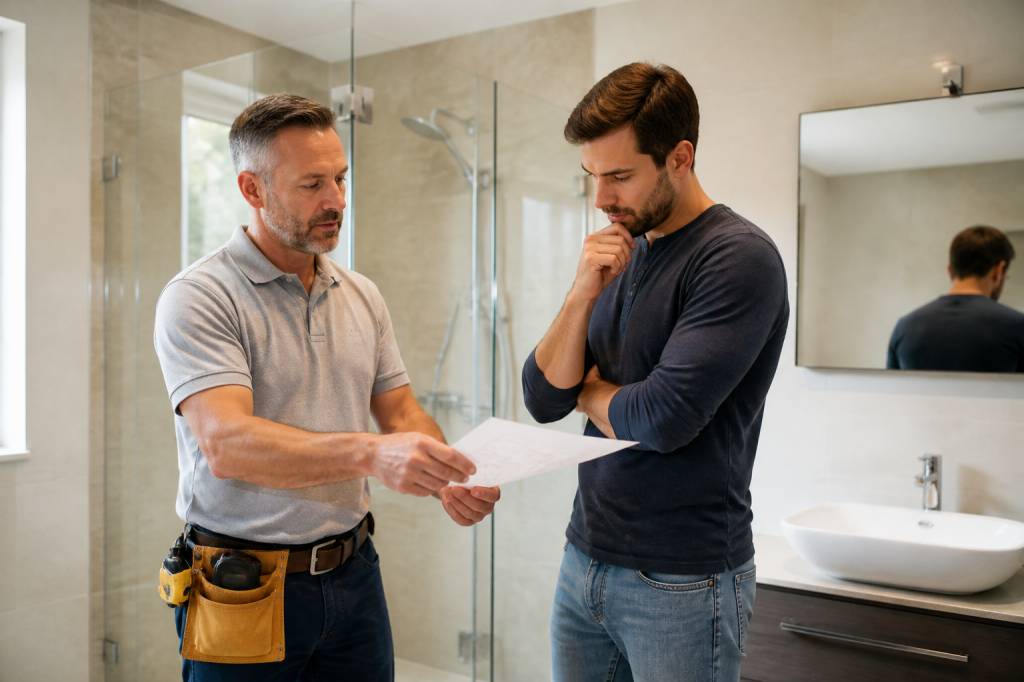
Choosing the right contractor for a bathroom remodel is a bit like choosing the right pair of boots for a muddy site: get it wrong, and you’ll feel every misstep. Get it right, and the whole project becomes smoother, faster, and far less stressful. A bathroom renovation involves plumbing, electrics, waterproofing, tiling, ventilation, and often a fair amount of “while we’re here, let’s fix that too.” So the contractor you hire matters more than most people realise.
If you’ve ever walked into a bathroom halfway through a remodel and thought, “This looked simpler in my head,” you’re not alone. Bathrooms are small spaces, but they hide big technical demands. The good news? With the right approach, choosing a contractor doesn’t have to feel like a gamble. A bit of structure, a few smart questions, and a healthy dose of caution can save you from expensive surprises later on.
Start with the scope, not the search
Before you call a single contractor, define what you actually want done. This sounds obvious, but many project headaches begin with a vague brief. Are you doing a cosmetic refresh with new tiles, sanitaryware, and paint? Or is this a full strip-out with plumbing changes, underfloor heating, and a reconfigured layout?
Contractors price jobs based on scope, and vague plans usually produce vague quotes. Worse, they can lead to disputes once work starts. A contractor may assume the old bath stays in place, while you expected a walk-in shower, double vanity, and recessed storage. That little misunderstanding can turn into a costly argument.
Make a simple list of what you want changed, what must stay, and what you’d like if the budget allows. If possible, sketch the room or gather a few reference photos. You do not need an architect’s portfolio here. Even a basic mood board can help the contractor understand your expectations.
Look for relevant bathroom experience
Not every good builder is the right builder for a bathroom. Bathrooms are unforgiving spaces. A small mistake with waterproofing can cause damage that stays hidden until it’s already expensive. A poor tile layout may not stop the room working, but you’ll notice it every morning when you brush your teeth.
When reviewing contractors, look for specific bathroom renovation experience. Ask how many bathroom projects they complete each year. Ask whether they handle the full job in-house or rely heavily on subcontractors. A contractor who regularly renovates bathrooms will understand the order of operations, the drying times, the moisture risks, and the little details that make the difference between “finished” and “properly finished.”
If a contractor mainly does extensions, loft conversions, or general maintenance, they may still be excellent, but bathroom-specific work requires extra care. A bathroom is not the place for learning on the job.
Check credentials, insurance, and compliance
This part is less glamorous than choosing tiles, but it is far more important. A reliable contractor should have the proper insurance and be able to demonstrate that they follow relevant building regulations and safety standards.
At a minimum, ask about public liability insurance and employer’s liability insurance if they have staff. If electrical work is involved, make sure the appropriate qualified professional will handle it. Plumbing work should also be performed by someone competent and experienced. In some cases, you may need building control approval, especially if structural alterations or major drainage changes are involved.
Don’t be shy about asking for documents. A professional contractor will expect it. If someone gets defensive when you ask about insurance, that tells you more than the policy ever could.
Review past work properly
Most contractors can show you a neat set of polished photos. That’s useful, but photos alone do not tell the full story. Ask for recent bathroom projects similar to yours, not just the best-looking one from five years ago.
If possible, request references from previous clients. Better still, ask questions that reveal how the project actually went:
- Did the contractor keep to the agreed schedule?
- Was the communication clear and consistent?
- Were problems handled calmly and professionally?
- Did the final result match the quote and the plans?
- Would the client hire them again?
A beautiful bathroom is great. A beautiful bathroom delivered without chaos is better. The latter usually depends on how the contractor manages the job, not just how good their tile work looks in photos.
Get more than one quote, and compare like for like
Getting multiple quotes is one of the simplest ways to protect your budget. But don’t make the mistake of comparing only the total price. A low quote can look attractive until you realise it excludes demolition, waste removal, waterproofing, or finishing work. Then the “bargain” starts growing teeth.
Ask each contractor to quote on the same scope of work. Ideally, provide the same brief to all of them. If one quote is much lower than the others, treat it carefully. Sometimes it means they have found a more efficient method. More often, it means something has been missed.
Also look at how the quote is written. A good quote should be clear and broken down into sensible sections. You want to know what is included, what is excluded, and where allowances have been made for items such as tiles, fittings, or bathroom fixtures. If the quote is a single vague lump sum, that is not a great sign.
Pay attention to communication from day one
You can learn a great deal about a contractor before they ever lift a tool. Do they return calls and messages promptly? Do they answer questions clearly? Do they listen, or do they steamroll you with jargon?
Bathroom projects involve a lot of decisions, and good communication makes those decisions easier. If a contractor struggles to explain the basics during the quoting stage, that same problem will probably continue once work begins. And trust me, trying to interpret half-explained plumbing updates while standing in a hallway with no shower is not a pleasant hobby.
The best contractors are not just skilled tradespeople. They are also organisers, problem-solvers, and calm translators of technical chaos. You want someone who can say, “This is the issue, this is the fix, and this is what it means for your budget and timeline.” Clear, honest, no drama.
Ask about the schedule and how delays are handled
Every renovation has a timeline, and every timeline has the potential to wobble. The question is not whether delays can happen, but how the contractor handles them.
Ask how long they expect the project to take, what could cause delays, and how they communicate changes once the job is underway. Bathroom remodels can be affected by product lead times, hidden water damage, outdated pipework, or unexpected subfloor issues. A contractor with experience will not promise a fantasy schedule. They will give you a realistic one.
It also helps to ask whether they manage one project at a time or several at once. If they are juggling too many jobs, your bathroom may end up waiting for attention between other sites. That’s rarely ideal, especially if the room is out of service.
Understand who is actually doing the work
Some contractors personally oversee the full project. Others manage a team of subcontractors. Neither approach is automatically better, but you should know which one you are hiring.
If the contractor is using subcontractors, ask who they are, how long they have worked together, and who will be responsible for quality control. Coordination matters enormously in bathrooms, where plumbing, electrical work, tiling, and carpentry all need to follow a sensible sequence.
A well-run team can deliver excellent results. A poorly coordinated one can create delays, errors, and the kind of “That’s not my job” conversations every homeowner dreads. If there is a project manager involved, make sure you know how often they will be on site and who your day-to-day contact is.
Be clear on materials, fixtures, and allowances
One of the easiest ways for a bathroom budget to drift off course is through unclear material allowances. A quote may include a sum for tiles, taps, a basin, or a shower screen, but that allowance may be far below the products you actually want.
Ask the contractor to explain what those allowances are based on. If you already know the products you want, share them early. That allows the contractor to price the project more accurately and reduces the number of nasty little surprises later.
This is also the stage where a practical eye helps. A contractor worth listening to will often tell you if a certain choice is awkward, overpriced, or difficult to install well. That is not them being difficult. That is experience doing you a favour.
Watch for red flags early
Some warning signs are small, but together they paint a clear picture. If you notice several of these, think carefully before proceeding:
- The contractor pressures you to decide immediately.
- They avoid written quotes or written confirmations.
- They are vague about insurance or qualifications.
- They cannot provide recent references.
- The quote is far cheaper than everyone else’s without explanation.
- They seem dismissive of your questions.
- They promise unrealistic timelines or “no problems, mate” answers to everything.
That last one deserves special mention. Confidence is useful. Overconfidence is expensive.
Discuss payment terms before work begins
A professional contractor should be transparent about payment terms. You may be asked for a deposit, followed by staged payments linked to progress. That is normal in many renovation projects. What matters is that the structure is clear and fair.
Avoid paying too much upfront. You want enough to secure materials and booking, but not so much that your leverage disappears before the job starts. Ask what triggers each payment stage, and make sure you understand whether it is tied to materials delivered, demolition completed, tiling finished, or final handover.
If a contractor asks for a large cash payment with little paperwork, that should raise your eyebrows. A clean project deserves clean administration.
Put everything in writing
Even the best working relationship can become messy if expectations live only in spoken conversation. Before work starts, make sure you have a written agreement that includes the scope, the timeline, payment terms, materials allowances, and what happens if changes are needed.
Bathroom remodels often uncover hidden issues. Old leaks, rotten timbers, or questionable pipework may only appear after demolition begins. That is normal enough, but the process for handling extra work should already be agreed. Surprises are easier to manage when the rules are clear.
Keep copies of emails, quotes, product selections, and any changes approved along the way. It sounds administrative, but it can save an enormous amount of time if questions arise later.
Trust your instincts, but back them up with facts
Sometimes the deciding factor is simple: does this contractor feel dependable? Do they seem like someone you can have in your home for several weeks without regretting every life choice that led you here?
Instinct matters, but it should be supported by evidence. A contractor who communicates well, provides a detailed quote, shares references, and has relevant bathroom experience is usually a solid candidate. On the other hand, if something feels off and the facts are not reassuring, it is wiser to keep looking.
There is no prize for hiring the first person who answers the phone. A bathroom remodel is too important, too visible, and too expensive to rush. The right contractor will not just build the room you asked for. They will help you avoid the mistakes you did not even know to worry about.
A practical final thought before you sign
Choosing a contractor for a bathroom remodel is not about finding the cheapest quote or the most polished sales pitch. It is about finding someone who understands the technical demands of the job, communicates clearly, and treats your home with the same care they would expect in their own.
If you take the time to define the scope, compare quotes carefully, check credentials, and ask the right questions, you give your project a far better chance of staying on budget and on track. And if you want the honest version of the advice: the best bathroom contractor is usually the one who makes a complicated process feel manageable.
That is the real measure. Not just whether the tiles are straight, but whether the journey to get there was steady, transparent, and free from avoidable surprises.