
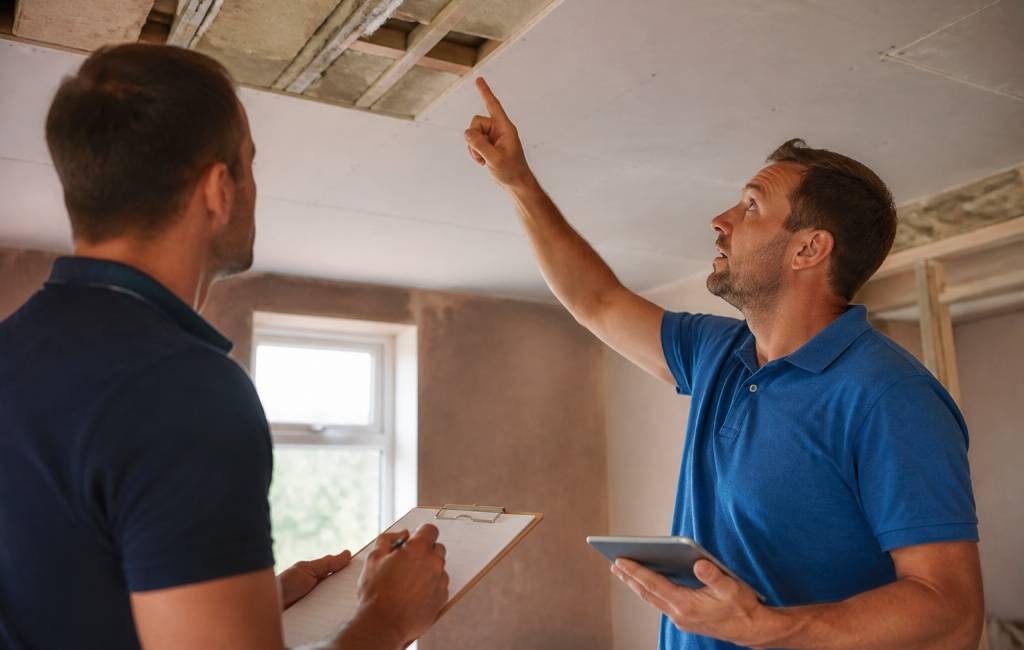
House repairs rarely arrive at a convenient moment. A dripping ceiling, damaged brickwork or a boiler that has decided to retire in the middle of winter can quickly turn a quiet week into a stressful one. For small jobs, a confident DIY approach may be enough. But when the repair affects your home’s structure, safety or weather protection, hiring a professional contractor is often the sensible choice.
The challenge is finding someone who is reliable, suitably qualified and capable of doing the work properly—not simply the person with the lowest price or the first available slot. A good contractor should make the repair feel manageable. The wrong one can leave you with unfinished work, unexpected bills and a new problem where the old one used to be.
Here is what to look for when hiring a professional for house repairs in the UK.
Start by defining the repair
Before contacting contractors, take a little time to understand the problem. You do not need to diagnose everything yourself, but a clear description will help professionals give you more accurate advice and estimates.
Take photographs of the affected area, note when the issue began and record any changes. Is the damp patch getting larger? Does the crack appear only after heavy rain? Has a door gradually become harder to close? These details may help a contractor identify the underlying cause rather than simply treating the visible symptom.
For example, painting over a damp stain might make the wall look better for a few weeks, but it will not solve a leaking gutter, failed pointing or damaged roof flashing. A capable contractor will be interested in why the problem occurred, not just how quickly it can be covered up.
- Write down the repair you need and when you first noticed it.
- Take clear photographs from several angles.
- Check whether the problem is affecting other rooms or parts of the property.
- Gather any previous repair invoices, surveys or guarantees.
- Decide whether the work is urgent or can be planned carefully.
Look for relevant experience
“Builder” is a broad term. One contractor may specialise in extensions and structural alterations, while another is particularly good at roofing, plastering or general maintenance. For the best result, look for experience that matches your specific repair.
Ask potential contractors how many similar jobs they have completed recently. If you need repointing, ask about previous brickwork projects. If you have movement cracks, find out whether they have dealt with structural investigations or work alongside a structural engineer. If the repair involves electrics, gas or major plumbing, make sure the person has the correct qualifications for that area.
A contractor who is honest about the limits of their expertise is often more trustworthy than someone who claims to do absolutely everything. No single tradesperson is an expert in every corner of a house. Even the most enthusiastic general builder should know when to bring in a specialist.
Check qualifications, registration and insurance
Qualifications and registrations depend on the type of work being carried out. For gas work, the contractor must be registered with Gas Safe. Electrical work may need to be completed or certified by a suitably qualified electrician, particularly where Building Regulations apply. Structural work could require calculations or input from a professional engineer.
Ask contractors which qualifications or trade memberships are relevant to your project. Membership of a recognised trade association can provide additional reassurance, although it should not replace your own checks.
Insurance is equally important. A professional contractor should normally have public liability insurance, which protects against damage or injury connected with their work. If they employ staff, employers’ liability insurance may also be required. Do not be embarrassed to ask for confirmation of cover. You are not being difficult; you are protecting your home and your finances.
For larger repairs, you may also want to ask about professional indemnity insurance, especially where design, advice or structural decisions are involved. Keep copies of any documents provided and check that the policy is current.
Ask for references and inspect previous work
A contractor’s website can be useful, but it is only part of the picture. Photographs may show attractive finished projects, yet they rarely tell you whether the work was completed on time, whether the site was kept tidy or how the contractor handled an unexpected complication.
Ask for references from recent customers and, where practical, look at completed work in person. A good contractor should be able to provide examples without hesitation. Speak to previous clients about a few important points:
- Was the original quotation clear and accurate?
- Did the contractor arrive when promised?
- Were changes and extra costs explained before work continued?
- Did the team protect floors, furniture and neighbouring areas?
- Was the site left clean and safe each day?
- Would the customer hire the contractor again?
That final question can be surprisingly revealing. A tidy website is pleasant, but a former customer’s experience is usually far more valuable.
Get several written quotations
For most substantial repairs, obtain at least two or three written quotations. This gives you a clearer idea of the likely cost and helps identify unusual differences between contractors. One quote may be much cheaper because it excludes scaffolding, waste removal, preparation work or materials that another contractor has included.
A proper quotation should describe the work in enough detail for you to understand what you are paying for. It should ideally include:
- A clear description of the repair and preparation required.
- The materials and products to be used.
- Labour costs and whether VAT is included.
- Scaffolding, access equipment and waste disposal costs.
- The estimated start date and duration.
- Payment stages and accepted payment methods.
- How additional work or changes will be priced.
- Any guarantees supplied after completion.
Be cautious with vague estimates written on the back of an envelope. There is nothing wrong with a simple document, but important details should not be left to memory or a friendly handshake. Friendly is good. Written is better.
Do not choose on price alone
Everyone has a budget, and nobody enjoys paying more than necessary. However, the cheapest quotation is not automatically the best value. A low price may indicate that the contractor has missed an important part of the repair, is using inferior materials or is trying to win the job before adding extras later.
Compare quotations line by line. Does one contractor include proper preparation while another only includes the visible finishing work? Are both allowing for the same quality of materials? Is one planning to repair the cause of the issue while the other is only making it look presentable?
A useful question is: “What exactly is included in this price, and what might not be?” The contractor’s response will tell you a great deal about their communication style and professionalism.
Pay attention to communication
Good communication is one of the strongest signs of a dependable contractor. They should listen carefully, explain the proposed repair in plain language and answer questions without making you feel foolish for asking them.
Pay attention from the first contact. Do they return calls or emails within a reasonable time? Do they arrive for an inspection when agreed? Do they provide a quotation when promised? Delays can happen in the building trade—materials go missing, weather changes and emergencies appear—but a professional keeps you informed.
During the initial visit, notice whether the contractor takes time to inspect the problem properly. Someone who glances at a ceiling for thirty seconds and immediately quotes a price may not be investigating deeply enough. A careful professional will ask questions, check surrounding areas and explain what further inspection may be necessary.
Confirm who will carry out the work
Some contractors complete every job with their own team. Others use subcontractors. Neither approach is automatically wrong, but you should know who will be working in your home and who is responsible for the finished repair.
Ask whether subcontractors will be involved and whether they hold the qualifications needed for their part of the work. Clarify who you should contact if a problem appears after completion. You do not want to discover halfway through the project that the person who gave you the quotation has handed everything to someone else.
If the repair involves several trades, ask how the work will be coordinated. Roofing, plastering, decorating and electrical work may need to happen in a particular order. Poor coordination can create delays and leave one trade blaming another.
Agree the contract and payment schedule
Even for a modest repair, a written agreement is worthwhile. It should confirm the scope of work, price, expected timescale, payment arrangements and responsibilities for materials or waste.
Avoid paying the full amount upfront. A reasonable deposit may be necessary to order materials, but large advance payments should be treated carefully. Payments linked to clear stages of progress are generally easier to manage. For instance, you might agree one payment when preparation is complete, another after the main repair and the final balance once the work has been inspected.
Keep records of invoices, receipts, messages and agreed changes. If you request an additional repair during the project, ask for the extra cost in writing before the work begins. Small changes have a habit of multiplying, rather like rabbits with tool belts.
Check planning and Building Regulations requirements
Many ordinary repairs do not require planning permission, but some projects may need approval or must comply with Building Regulations. This can apply to structural alterations, replacement windows, roof work, electrical installations, drainage changes and improvements to fire safety or insulation.
A responsible contractor should tell you when approvals may be required, but do not assume they will handle everything automatically. Ask who is responsible for applications, inspections and certificates. Keep all paperwork once the work is complete, as it may be important when you sell or remortgage the property.
There may also be special considerations if your home is listed, located in a conservation area or shares walls with neighbouring properties. A quick conversation with your local council or a qualified professional can prevent an expensive mistake.
Discuss protection, safety and tidiness
House repairs can be disruptive, but a professional should take reasonable steps to protect your home. Ask how floors, windows, furniture and outdoor areas will be covered. Find out where tools and materials will be stored and how dust and waste will be controlled.
Safety matters especially when work involves ladders, scaffolding, power tools, asbestos-containing materials or live services. Never ask a contractor to cut corners to save time. If asbestos is suspected in an older property, stop work and seek specialist advice rather than allowing someone to disturb it casually.
Agree how the site will be left at the end of each day. You may not expect a building site to look like a hotel, but you should not have to navigate loose nails and trailing cables to reach the kettle.
Understand guarantees and aftercare
Ask what guarantee applies to the completed work and what it covers. A guarantee should explain its duration, exclusions and the process for reporting a problem. Remember that a manufacturer’s warranty for materials is not always the same as a contractor’s guarantee for installation.
Before making the final payment, inspect the work carefully. Check that the repair matches the agreed quotation, finishes are acceptable and all waste has been removed. Raise concerns promptly and keep communication polite but clear. Most issues are easier to resolve when they are identified early.
Choosing a contractor is not simply a search for the fastest pair of hands. It is about finding someone who combines technical ability with honesty, communication and respect for your home. Take time to check experience, insurance, references and quotations. Ask sensible questions, insist on written details and trust your instincts when something feels unclear.
The right professional will not be offended by careful checks. In fact, they will usually welcome them. A well-organised repair begins long before the first tool is unpacked—and that preparation is often what separates a job that merely looks finished from one that stays sound for years.